
The festival year begins with Passover,
in the beginning of spring.
“In the fourteenth day of the first month at even is the Lord’s Passover.”
Lev. 23:5
 |
The Lord gives a single verse of instruction for Passover since the children of Israel and Moses had recently celebrated it. |
|
|
So in Lev. 23 God merely gives Passover its date, which is fascinating in itself. |
|
|
God’s calendar is a lunar calendar based on the phases of the moon rather than the earth’s revolutions around the sun. |
 |
 |
Each month starts with a new moon, reaching a full moon in the midst of the 28 day cycle. |
|
|
Passover always falls on a full moon…the 1st full moon of spring. |
|
|
The 28 day lunar cycle is harmonious throughout nature. |
|
|
The tides of the seas rise and fall with the moon. |
|
|
Even the menstrual cycle seems to obey this particular time cycle. |
|
|
The moon makes a much better calendar than the sun…since it changes every night. |
|
|
Those accustomed to a lunar calendar could tell on any clear night what day of the month it was. |
|
|
The sun, of course, does not change daily. We see it whole or we don’t see it at all. |
|
|
The Hebrew day begins at sundown, or moonrise. |
 |
→ Back to the meaning of Passover; it is surely the feast of salvation.
|
|
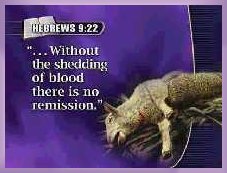
On this day, because of the blood of the lamb (without spot…perfect lamb) the Hebrew nation was delivered out of bondage. |
|
|
In both the Old and the New Testaments the blood of the lamb/Lamb delivers from slavery, the Jew from Egypt and the Christian from sin. |
The Passover Service introduces us to the first of the annual "appointed times" on God's calendar.
|
|
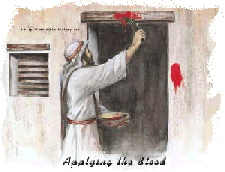
We are familiar with the account of the Passover in Exodus. God passed over the houses of the believers who had obeyed God’s command to apply the blood of a literal lamb to the lintel and doorposts of their houses. |
|
|
The Almighty God spared the lives of Israel’s firstborn, but authorized the Destroyer to kill all the firstborn of the Egyptians. |
|
“And it came to pass, that at midnight the Lord
smote all the firstborn in the land of Egypt, from the firstborn of the
Pharaoh that sat on his throne unto the firstborn of the captive that
was in the dungeon, and all the firstborn of the cattle.
And Pharaoh rose up in the night, he, and all his servants, and all the
Egyptians; and there was a great cry in Egypt; for there was not a house
where there was not one dead.”
|
Few of us are aware of the implication behind the plagues:
it was a cosmic war against the powers of darkness!
The Rod of Moses
Before we start with the plagues, let’s start with the “Rod and the Serpent” (Ex 7:8).
We all know the story.
|
|
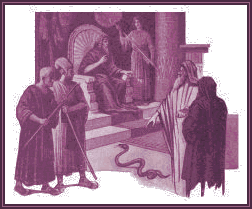
And the LORD spake to Moses and unto Aaron saying (vs.9), "When Pharaoh shall speak unto you, saying, Shew a miracle for you: then thou shalt say unto Aaron, Take thy rod, and cast it before Pharaoh, and it shall become a serpent. |
|
|
As you remember, the rod was cast down and became a serpent (vs.11). “Then Pharaoh also called the wise men and the sorcerers: now the magicians of Egypt, they also did in like manner with their enchantments.” (Secret arts) |
|
|
Some scholars think that this was some sort of sleight of hand...not real! |
|
|
I don’t think so since they were able to do the first 3 miracles. |
|
|
Rod to serpents |
| Water to blood | |
|
|
And the frogs at least well enough that Pharaoh was unimpressed. |
|
|
However, when it came to the lice, they were shook up. They recognized it to be the "finger of God." |
|
|
It is clear they had powers to a certain point but, once they could not imitate anymore, they were rattled. |
|
|
Am I saying that they had supernatural power? YES! Does that make you stop and think?? |
Satan 's Counterfeit
"For they cast down every man his rod, and they became serpents: but Aaron's rod swallowed up their rods."
Ex 7:12
|
|
How many of Pharoah's men cast down their rods? Two. How do we know this? |
|
|
"Now as Jannes and Jambres withstood Moses, so do these also resist the truth: men of corrupt minds, reprobate concerning the faith." 2 Tim 3:8 |
|
|
Paul was commenting on those that confronted Moses. He mentioned two names, Jannis and Jambres: Paul somehow knew their names and that they withstood Moses. |
|
|
We get an insight here to the goal of Pharoah, their commander. Spiritual speaking, Pharaoh was a type of satan . |
|
|
His goal was that they would withstand Moses. How? By IMITATION! |
|
|
Remember Matthew 13 and the Parable of the Tares in the Wheat? The field is the world, the seed is the Word of God, and the enemy sows tares which look like wheat when they are young. |
|
|
Notice the goal of the enemy: to create a counterfeit. Here, before Pharaoh, they created counterfeit serpents like Moses' real one! God demonstrated His the control by causing Moses' serpent to swallow the other two. The serpent turned back into a rod for Moses. |
|
|
This idea that satan can do miracles bothers a lot of people, but you need to be aware of the fact that he can. |
Always ask these questions of miracles:
In whose authority are they
done?
Who gets the glory?
The issue is not the miracles themselves or the supernatural!
|
|
The issue should be: is it of a form that gives Jesus Christ the glory? |
|
|
If it is a form that gives glory to any other, shun it! |
|
|
Don't expect a minister of satan to give glory to satan, they can give it to anything other than Christ to achieve their goal. |
|
|
Satan's goal is counterfeit, imitation, deceit….not necessarily direct confrontation…but counterfeit! |
The Ten Plagues
Most miracles are
natural phenomena.
The Ten Plagues were notable exceptions.
There the laws of nature were turned upside down to help free the Hebrew
Children.
1st: Waters Turned to Blood
|
|
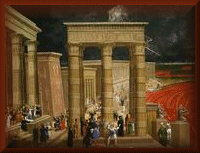
The first of the judgments was upon the waters of Egypt. |
|
|
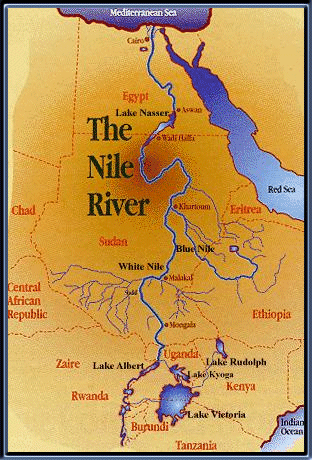
The Nile was the highway of this ancient land, as it still is today. |
|
|
The Nile River was worshiped by the Egyptians. |
|
|
As part of their cultural background, the Nile was a god they worshiped, a source of life. |
|
|
Notice this was the first place that God judged, the river! |
|
|
Not only was the Nile turned to blood, but the other waters of the land were as well, even the waters that were drawn for use in the houses in wooden and stone jars. |
|
|
For seven days the whole land was in horror: with dead fish. a stench from the river, and the inability to find fresh drinking water. |
|
|
To better appreciate what was going on, we must examine the various gods of the river. This gives us our first peek at the cosmic war against the powers of darkness. |
|
|
Osiris, one of the chief gods of Egypt, was first of all the gods of the Nile. |
|
|
Osiris' companion was the mother god, Isis. |
|
|
They had a child, Horus. (Those three were human-headed gods (in contrast to the many that had heads of birds, beasts, and reptiles). |
|
|
Hapimon was in the north. |
|
|
Taueret was at Thebes and the hippopotamus goddess of the river. |
|
|
Nu was the god of life in the Nile. |
|
|
The supernatural pollution of the waters of the land was a humiliation to the gods the Egyptians worshiped.
2nd: The Frogs
|
|
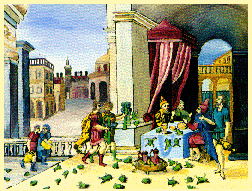
The second of the plagues further proved the powerlessness of the gods of Egypt. The land was covered with a plague of frogs in such abundance that they infested the Egyptians' houses and beds. |
|
|
One of the principal goddesses of the land was Hekt, the wife of the "creator of the world," who was always shown with the head and the body of a frog. |
|
|
The frogs came out of the sacred Nile and Egypt's devotion to them prevented them from dealing with them. They soon had decaying carcasses throughout the land resulting in a stinking horror. It is interesting that the magicians could increase the frogs (in Ex 8:7) but couldn't make them go away. |
It is interesting that the climactic war against God in Revelation is assembled by three frog-like spirits:
 |
"And
I saw three unclean spirits like frogs come out of the mouth
of the dragon, and out of the mouth of the beast, and out of
the mouth of the false prophet. (v.14) For they are the
spirits of devils, working miracles, which go forth unto the
kings of the earth and of the whole world, to gather them to
the battle of that great day of God Almighty." |
 |
These unclean spirits will lead the entire world to war against God!
3rd: The Sand Flies
|
|
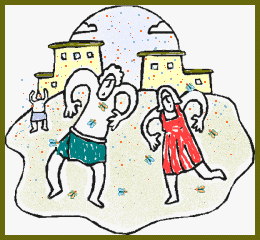
The third of the judgments on Egypt came out of the soil in Egypt. The Hebrew word ken is translated "lice" in our English translation, with "sand flies" or "fleas" in some marginal notes. |
 |
|
|
The Hebrew word comes from a root meaning to dig; it is probable that the insect was one, which digs under the skin of men. |
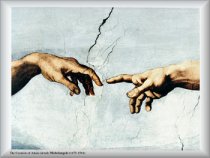
"Then the magicians said unto Pharaoh, This is
the finger of God;…"
Ex 8:19
|
|
There was something about lice that freaked them out. They were able to deal with the serpents, the water to blood, and the frogs. When it came to the lice, not only could they not do it, they went to Pharaoh and told him that it was, "the finger of God" So, what was the big deal with the lice? |
|
|
The priests of the Egyptian system had a big thing about cleanliness. They wore special linen garments, they shaved their head every third day. In order for them to worship according to their system, they had to be totally clean. The infestation of the lice made it impossible for them to worship. |
|
|
The priests themselves could not officiate in agreement with the system that they were following. The bringing of the lice against them made them recognize that God was dealing with them. They went to Pharoah to point out that this was "the finger of God." |
|
|
This was an embarrassment to their great god of the earth, Geb, to whom they gave offerings for the bounty of the soil. |
4th: The Scarabs
The fourth of the plagues were
"swarms" ("of flies" is not in the original).
The word is `arob, a swarm, possibly suggesting unending motion.
|
|
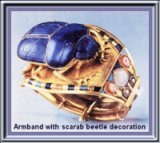
The deification of the scarab beetle is still noticeable - even today - in the jewelry and artifacts celebrating ancient Egypt. |
 |
|
|
Amon-Ra, the king of the gods, had the head of a beetle. Some of the giant scarabs were even accorded the honor of mummification and entombment with the Pharaohs. | |
|
|
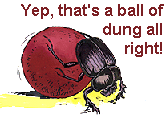
This is particularly bizarre since the scarab is actually a dung beetle. The insect is about the size of a nickel and feeds on dung in the fields or the side of the road. |
|
|
|
When animals defecate, these insects swarm from their holes in the ground and collect the dung for future meals by forming it into round balls about the size of golf balls, which they roll across the ground to their underground dwellings. |
 |
|
|
Since they seemed to "come from nowhere," and perhaps because these perfectly round balls were possibly associated with the sun, these beetles became associated with creation. (Also, the Egyptians seem to have had the mistaken notion that the scarabs deposited larvae in the ball, but that is not true.) |
|
|
|
The plague of swarms of scarabs, with jaws that could saw through wood and destructive qualities worse than termites, must have caused extreme bewilderment since they were so revered and thus were not to be interfered with! | |
|
|
Pharaoh called Moses, pleaded for a ceasing, hinted at the possibility of compromise, and even asked to be prayed for. |
But God doesn't compromise; the judgments continued.
5th: The Animals
|
|
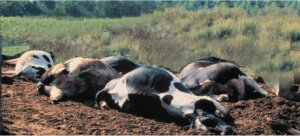
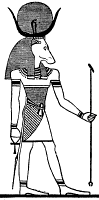
The fifth plague was against the domestic animals of Egypt. The spiritual effect was that it was against Apis, the bull god as well as the cow-headed Hathor, goddess of the deserts. |
 |
|
|
The worship of those gods was so widespread that even the children of Israel had become tainted with it, which led to the disaster of the golden calf in the image of Apis (Ex 32). | |
|
|
The plague was a "murrain" (severe pestilence), a contagious disease among the cattle. Even the sacred bulls in the temple died. |
|
|
|
The veneration of cows still creates a sight in India, when cows appear on the streets and even in stores and shops because people are not allowed to harm them. |
 |
The cattle of the Hebrews, of course, were not touched.
6th: Boils

|
|
The sixth plague was manifested against the
bodies of men. The plague of shechiyn, translated "boils," may hide
something more terrible.
|
|
|
The root means "burning." The same word can be translated as leprosy, botch in Egyptian, which was declared to be incurable. |
|
|
Among the gods to which cures would have been ascribed were Thoth, the ibis-headed god of intelligence and medical learning; Apis; Serapis; and Imhotep. |
|
|
Here, even the magicians did not escape and could not carry on their priestly duties. It was their custom to take the ashes of human sacrifices and cast them into the air. Borne by the wind over the population, they were viewed as a blessing. (Some think that this heathen custom was the source of the practice of putting ashes on the forehead on the first day of Lent.) |
(Note from Kay: I've had personal experience
with boils. I've had four altogether and, fortunately, only one at a time.
The ones I had were VERY painful. They swelled up to the size of lemons.
I had to have them lanced and... don't read this if you are squeamish...they had
lots of purple and yellow pus in them.
They left large scars. Someone who had boils all over would not be able to
be touched where the boils were. They might not be able to sit down or to
lie down. They could be in such pain that they don't even want to eat.)
7th: Fiery Hail
|
|
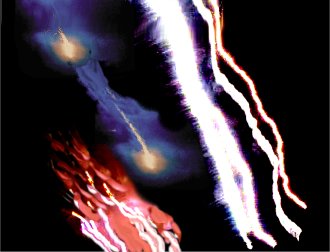
Egypt is a sunny land with practically no rain. The seventh plague was a tempest of hail and fire. |
|
|
Where was Shu, the wind god, and Nut, the sky goddess? Where was Horus, the hawk-headed sky god of upper Egypt? |
|
|
It is interesting to note that when Pharaoh confessed his sin and the sin of his people, he even used the Hebrew names for God: |
"I have sinned this time: the Lord [YHWH] is righteous, and I
and my people are wicked. Intreat the Lord [YHWH] that there be no more
mighty thunderings ["voices of Elohim"]."
Exodus 9:27-28
8th: Locusts
|
|
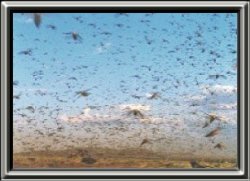
Some of the earlier plagues may have been separated by extended intervals, but the eighth plague followed immediately on the heels of the seventh: locusts came upon the land. |
|
|
Every twig and leaf that had somehow escaped the hail and fire was then taken by the locusts. |
Having
lost faith in their gods, rebellion was now in the air.
9th: Thick Darkness
|
|
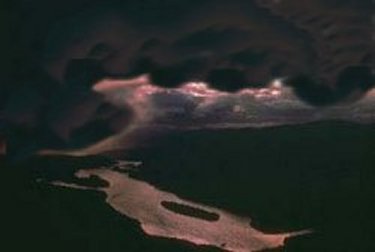
The ninth plague was a darkness that could be felt! Josephus wrote:
|
|
|
|
The darkness, after three days and three nights, was dissipated. |
10th: Death of the Firstborn
|
|
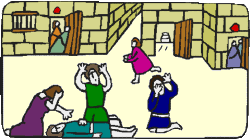
And, of course, the well-known tenth and final plague was the death of the firstborn in those homes not covered by the lamb's blood on the doorposts or lintels. |
|
|
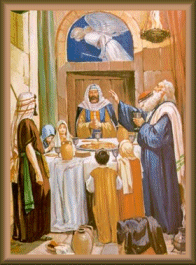
We all know the story of the Passover in Egypt, remembered by the Jews to this day. |
|
|
And, of course, John the Baptist clearly marked out the person of Jesus Christ as a blood sacrifice when he referred to Jesus as the "passover lamb" when he introduced Him as "The Lamb of God". (Jn 1:29,36) |
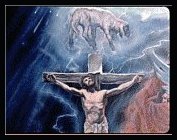
It is no coincidence that our Lord, Himself, was sacrificed on Passover.
Surprising as it may sound, that awesome experience of the death of the firstborn in ancient Egypt was a:
|
|
Scaled-down preview |
|
|
A miniature object lesson |
|
|
A dramatized prophecy |
|
|
A spiritual blueprint of this age |
In other words, The God of the Universe's main purpose in staging such a spectacular Passover display in ancient Egypt was His way of giving the entire universe a "prophetic preview" of His plan of the ages to pass over and deliver His people in the closing days of this age.
We do not keep the feast in remembrance of the exodus from Egypt, since that was the mere shadow of the greater redemption to come.
Passover represents our salvation.
The
Lord Himself instructed us to:
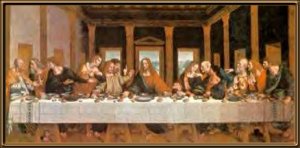
“Do this in remembrance of Me."
|
|
We do take communion, a part of the original Passover feast, in remembrance of the Lord. |
|
|
For as we eat the unleavened bread and drink the wine, the new covenant emblems of the Body of Christ, in truth we are applying the Blood of Jesus to the lintels of our souls and the doorpost of our hearts. |
|
|
The remarkable fulfillment of Passover on the exact day illustrates a principle, which we will see with each of the feasts. |
|
|
Our Lord fulfilled each feast on its appropriate day with an appropriate action up to the point we have now reached in His prophetic plan. |
|
|
We will see that all seven of the feasts have either been fulfilled, or are prophesied to be fulfilled. |
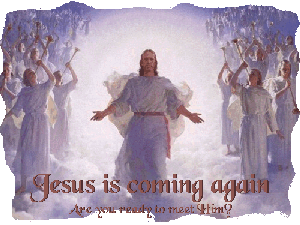
Yes, The Lord God of Israel, in the near future, is going to personally visit all the nations of the world, and as before, pass over all those who faithfully display the Sign of His Son’s blood on the lintels of their minds and the doorpost of their hearts!

References:
First Fruits of Zion
Chuck Missler
The next feast we will study is:

In His Love
Shalom, bj